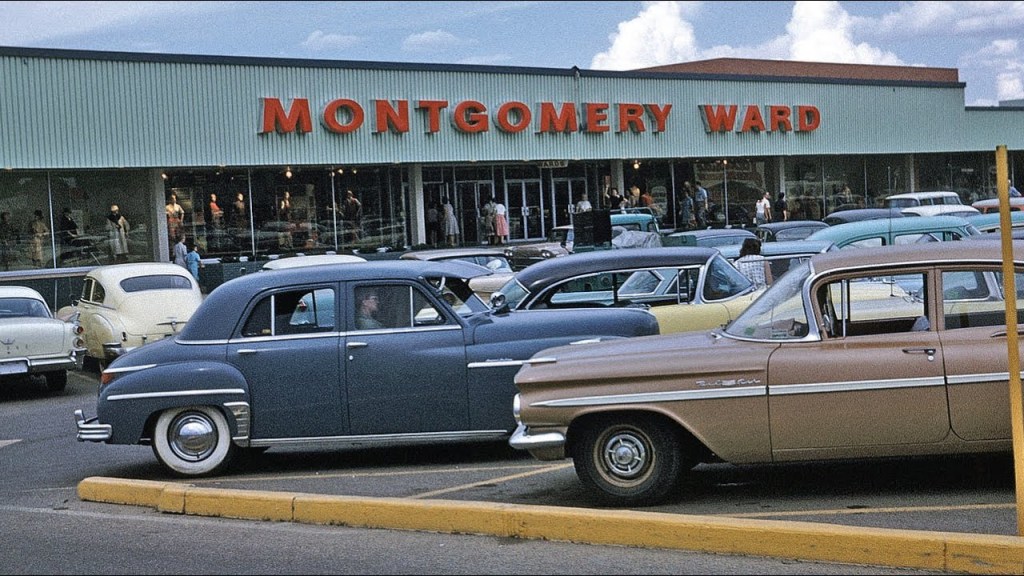
What Happened to Monkey Wards?
Let’s go all the way back to 1872 when Montgomery Ward & Company (aka Monkey Wards) began its pioneering mail-order business.
In a modest yet remarkable space perched atop a bustling livery stable in Chicago, Illinois, the visionary businessman Aaron Montgomery Ward ignited a revolution with his groundbreaking enterprise, driven by an unwavering passion to provide affordable products directly to eager shoppers during a time when retail options were disappointingly limited.

He recognized the untapped potential of the burgeoning postal system, allowing him to reach customers far beyond the confines of traditional storefronts.
By providing an extensive assortment of goods—ranging from apparel to home essentials—Ward revolutionized shopping habits and established the foundation for America’s retail landscape.
His innovative approach paved the way for other mail-order companies and eventually evolved into the modern e-commerce landscape we know today.
Coincidentally, this story is not unlike many successful online businesses we see today. It usually starts with very humble beginnings.
Please leave your comments in the “Leave a Reply” section at the bottom of this page
Of course, 1872 was a very different time and the concept of a mail order catalog seemed crazy. Yes, Mr Ward was crazy…crazy like a fox!
Why was Montgomery Ward called Monkey Wards?
Although this cannot be 100% verified, it is believed that Montgomery Ward sold exotic live monkeys. Back in 1872, this is not entirely a crazy idea. The name Monkey Wards was born!

Monkey Wards Competition
Twenty years after it’s inception, Montgomery Ward had some serious competition from another mail-order business. You may have heard of them. They were called Sears.
At the turn of the century, Sears led with over $10 million in sales, while Montgomery Ward followed with $8.7 million.
To boost his gross sales, Mr. Ward opened his first retail storefront in Plymouth, Indiana, in 1926. Within two years, he expanded to 244 brick-and-mortar stores.
Monkey Wards Struggle and Decline in the 70’s
In the 1970’s, due to a series of poor business decisions, the great Montgomery Ward began to struggle.
By 1985 it closed it’s mail-order business permanently.
Yes, we could bore you with all the financial details but let’s save that for another time.
In the late 90’s, companies like Target and Walmart began to become more and more of a threat and Montgomery Ward could not withstand the pressure.

In 1997, GE Capital promised to help Montgomery Wards but withdrew soon after. Montgomery Wards declared Chapter 11 bankruptcy, and after a poor Christmas season in 2000, closed all its stores. This left 37,000 employees unemployed.

Monkey Wards Goes Online
In 2004, an online marketing company called Direct Marketing Services Inc purchased the intellectual property of Montgomery Ward and began selling online under that name.
This acquisition did not quite work out for them and the Montgomery Ward name was sold again to Swiss Colony.
If you want to check them out today, you can find their online store below:
Despite its decline in the early 2000s, Monkey Wards’ legacy endures through its online presence.
While it’s unfortunate to see such an iconic department store vanish from neighborhoods, we can still value its impact on American retail history.
Montgomery Ward was ahead of its time, providing affordable and quality products long before others. Perhaps one day, Monkey Wards will return as a household name.
For now, let’s fondly remember it as a cherished part of our nation’s past.

About Aaron Montgomery Ward
Aaron Montgomery Ward (1844-1913) was an American businessman and entrepreneur who is widely regarded as the “Father of Mail Order Shopping.”
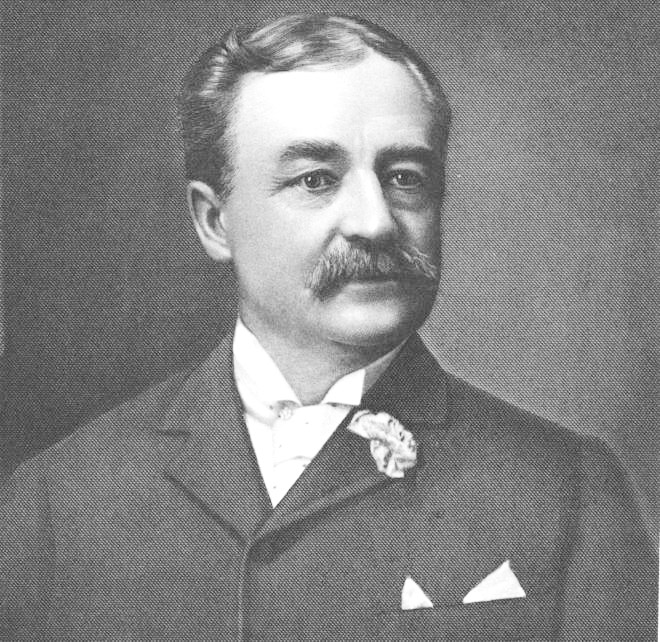
He was born in Chatham, New Jersey, and moved to Niles, Michigan at the age of nine. After working in a variety of jobs, he eventually became a traveling salesman for a dry goods company.

Aaron Montgomery Ward transformed the department store landscape with his mail-order business, enabling convenient and cost-effective purchases.
His marketing innovations boosted department store success and established him as a leading entrepreneur of the late 19th century.
Leave a comment