The Beginning
When did the Ford Mustang enter the automotive world and who’s responsible?
In order to fully understand this, we must first roll back the clock and take a look at the rise of the Ford Motor Company.
It was incorporated in 1903 by Henry Ford but was originally called “The Henry Ford Company” (1901).
Please leave your comments in the “Leave a Reply” section at the bottom of this page
The first gasoline engine was made in 1885 by Karl Benz but it was Mr Ford who created the first automotive assembly line and figured out a way to make cars affordable for many Americans.
In 1908, Ford Motor Company began mass-producing its revolutionary “Model T” car, which would go on to change the landscape of the automobile industry forever.

The Model T was an innovative and affordable vehicle designed for the average American, symbolizing industrial progress.
Over 20 years, Ford produced over a million cars, demonstrating high demand.
This vehicle revolutionized personal transportation and significantly impacted the economy by creating jobs and leading to the development of extensive road networks.
Ford Mustang – The Name
Where did the Ford Mustang get its name? Ford officially credited the name to the WWII Mustang P-51 fighter jet plane, a legendary aircraft that played a significant role in achieving air superiority during the war.
This connection was intended to evoke a sense of power, speed, and agility, qualities that the Mustang car embodies.
The P-51 Mustang was renowned for its exceptional performance and sleek design, making it a fitting inspiration for a vehicle aimed at capturing the hearts of enthusiasts and racers alike.
By naming the car after such an iconic plane, Ford not only paid homage to the aviation history but also created a powerful brand image that has continued to resonate with fans for decades.
The Ford Mustang, since its introduction in the 1960s, has evolved but has retained that spirit of freedom and adventure that its namesake represents.

The name was suggested by John Najjar, who co-designed the Ford Mustang along with Philip T Clark.
The Mustang prototype was built in 1961 and made it’s debut at the Grand Prix in Watkins Glen, New York on Oct 7th, 1962.
This model was a 2-seater concept car and evolved into the 4-seater Mustang Mach II in 1963.
The very first production Mustang was sold to Stanley Tucker and the year was credited as 1964 1/2.
Ford Mustang First Generation
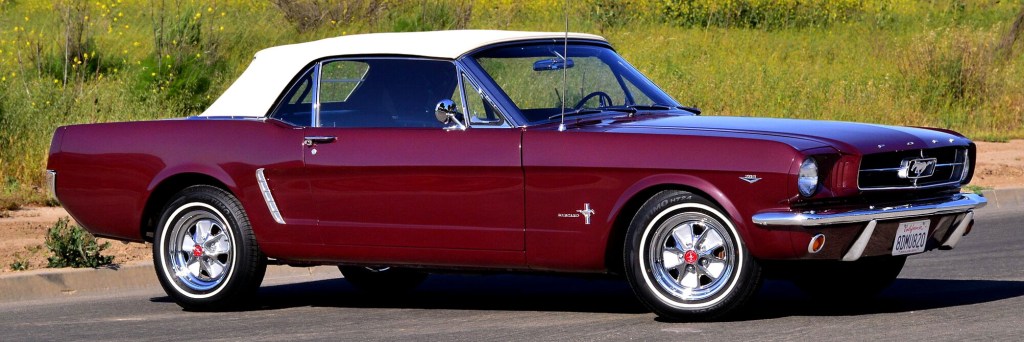
Ford Motor Company began producing the Mustang on March 9th, 1964 in Dearborn, Michigan USA.
It was first sold to the public on April 15th, 1964.. even before it was introduced at the World’s Fair on April 17th of the same year.
Word spread like wildfire. The Mustang was HOT!
The classic 2+2 Fastback was added to the Mustang line in September of 1964. What a beauty!
The Fastback has it’s own little place in classic car history.
What was Lee Iacocca’s Role in the creation of the Ford Mustang?
Lee Iacocca was instrumental in developing the Ford Mustang, recognizing an opportunity to create a sporty, stylish, and affordable car for the younger generation while serving as vice president and general manager of the Ford Division.
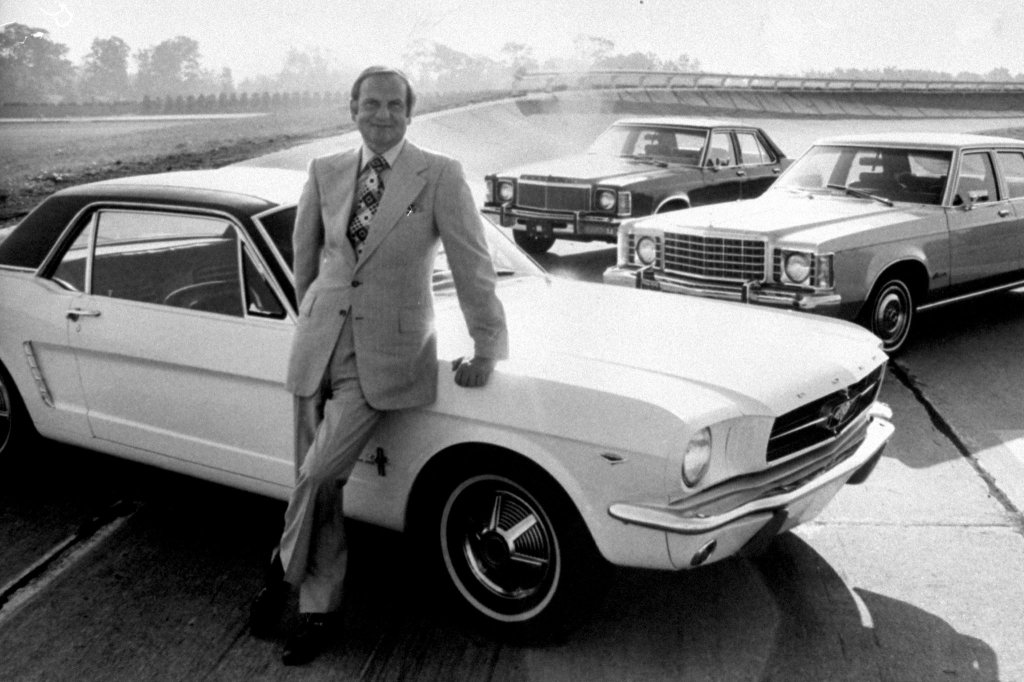
Iacocca supported the idea of the Mustang at Ford, pushing for its creation even when some company leaders were against it.
He envisioned a “personal car” that would connect with the youth culture of the 1960s.
With his guidance, the Ford Mustang was launched to the public on April 17, 1964, at the New York World’s Fair.
It quickly became popular, creating a lot of excitement and demand.
The Mustang is now one of the most famous and successful cars in history, thanks to Iacocca’s vision and determination.
Ford Mustang: Record Breaking Sales
At the advertised price of $2,368, Ford Motor Company projected sales at under 100,000 cars for that first year.
It far exceeded this projection by selling almost 400,000 Mustangs.
In it’s first 18 months, one million Mustangs were built!
A great American automotive brand had been established!

Ford Mustang Trivia
- On March 9th, 1964 the first Ford Mustang came of the assembly line and sold for $2,368 (retail)
- On opening day at the dealerships, Ford sold so many Mustangs that they had to put customers on a waiting list. Over 22,000 Mustangs were sold that first day and by the end of 1964, over 260,000 Mustangs had been sold
- In order to keep costs down, Ford used many parts from other models that they were already producing for the Ford Fairlane and the Ford Falcon
- The 2nd generation Mustang was introduced in 1974 and was marketed as The Mustang II. It was completely redesigned and was 500 lbs lighter and 19 inches shorter
- The “350” in GT 350 stands for the number of steps it would take to walk from the Ford production area to the racing shop
- The original artwork for the Mustang contained just the horse’s head, not the entire horse that we see today
- The most rare Mustang is the 1968 Mustang Shelby EXP500 “Green Hornet”. Completely restored, it can sell at auction for over $120,000
- The very first Mustang had only 3 gears
- The Ford Mustang’s name comes from a World War II fighter jet, not a horse
- Before Ford decided to call their car “Mustang”, the name “Cougar” was tossed around. Some prototypes were even made with a cougar logo
- Red is the most popular color sold for Ford Mustang
- The lowest horsepower for a Mustang was in the 1975 Mustang II. It came in at 87hp
Did You Know?
Did you know that the Mustang was inspired by the Ford Falcon, featuring a wider track and lower roofline, and its name reflects the free-roaming wild horse of the American West, symbolizing power and agility?
Another interesting fact is that the Mustang’s success was not just due to its sleek appearance and affordability, but also because it came at a time when a new generation of American drivers was emerging.
The Baby Boomers were coming of age and they wanted a car that reflected their sense of identity and freedom.
The Mustang provided them with just that.
It has also played a role in popular culture, appearing in many movies and TV shows over the years.
From the iconic car chase in the movie Bullitt, to being driven by Steve McQueen in the movie Gone in 60 Seconds, the Mustang has become a symbol of American muscle and style.
In conclusion, the Ford Mustang’s beginning was nothing short of legendary. Its unique design, affordable price, and perfect timing catapulted it to success and established it as a great American automotive brand.
The Mustang continues to be a beloved classic car today and a symbol of American ingenuity and individuality.
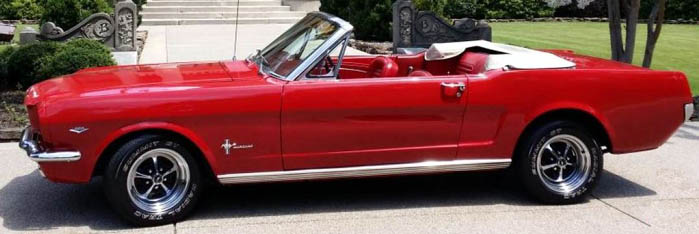
Ford Mustang was the first car to be offered with a convertible option
Ford Mustang: The Fastback
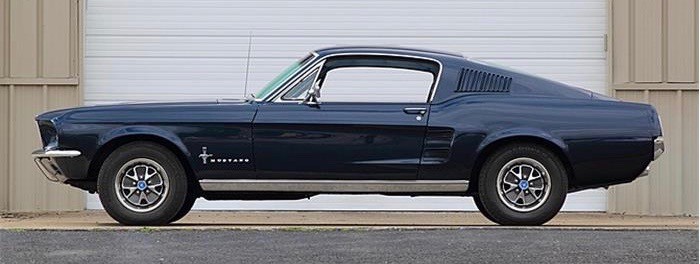
The Mustang Fastback, an iconic symbol of American automotive performance, has captivated enthusiasts and car lovers for decades.
First introduced by Ford in 1965 as part of the first-generation Mustang lineup, the Fastback quickly became a symbol of the muscle car era.
Its sleek and aerodynamic design, characterized by a long hood and a distinctive sloping rear roofline, set it apart from other cars of its time.
Under the hood, the Mustang Fastback was known for its powerful engines, ranging from the legendary 289 V8 to the thunderous 428 Cobra Jet.
This raw power translated to thrilling acceleration and the unmistakable roar of a V8 engine, making it a favorite among drag racers and speed enthusiasts.
Leave a Reply
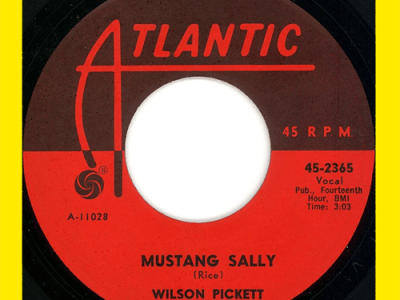
Mustang Sally – The Song
Mustang Sally – Lyrics Mustang Sally – guess you better slow your mustang downOh Lord, what I said nowMustang Sally, now baby – oh Lord – guess you better slow your mustang down You been running all over town nowOhhh, Guess I’ll have to put your flat feet on the groundHuh, what I said now…
Keep reading