
The Curious World of Mexican Jumping Beans
Nestled in the sunny landscapes of Mexico, amidst the vibrant flora and fauna, exists a peculiar natural wonder that has captured the imagination of many—the Mexican jumping bean.
Often mistaken for a toy or a product of human invention, these fascinating beans are, in fact, a product of nature’s ingenuity. Join us as we delve into the enchanting world of Mexican jumping beans, unraveling their mysteries and uncovering the science behind their playful antics.
Please leave your comments in the “Leave a Reply” section at the bottom of this page
The Origin of Mexican Jumping Beans
Contrary to popular belief, Mexican jumping beans are not beans at all but rather the seeds of a shrub known as Sebastiania pavoniana, native to the deserts of Mexico.
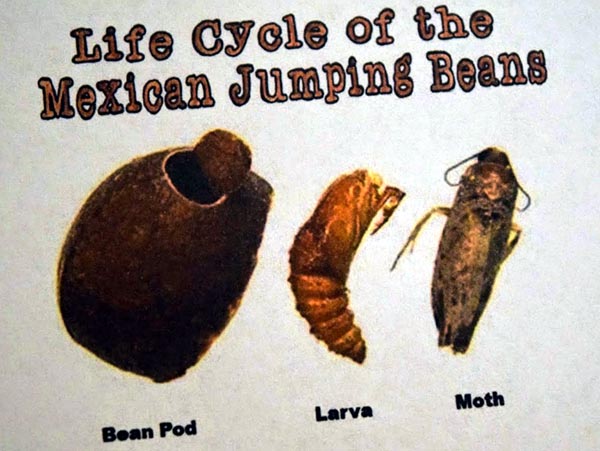
These seeds are inhabited by the larvae of a small moth species, Laspeyresia saltitans. The interaction between the plant, the moth, and the environment gives rise to the unique behavior that has captivated observers for centuries.
The Enigma of Movement
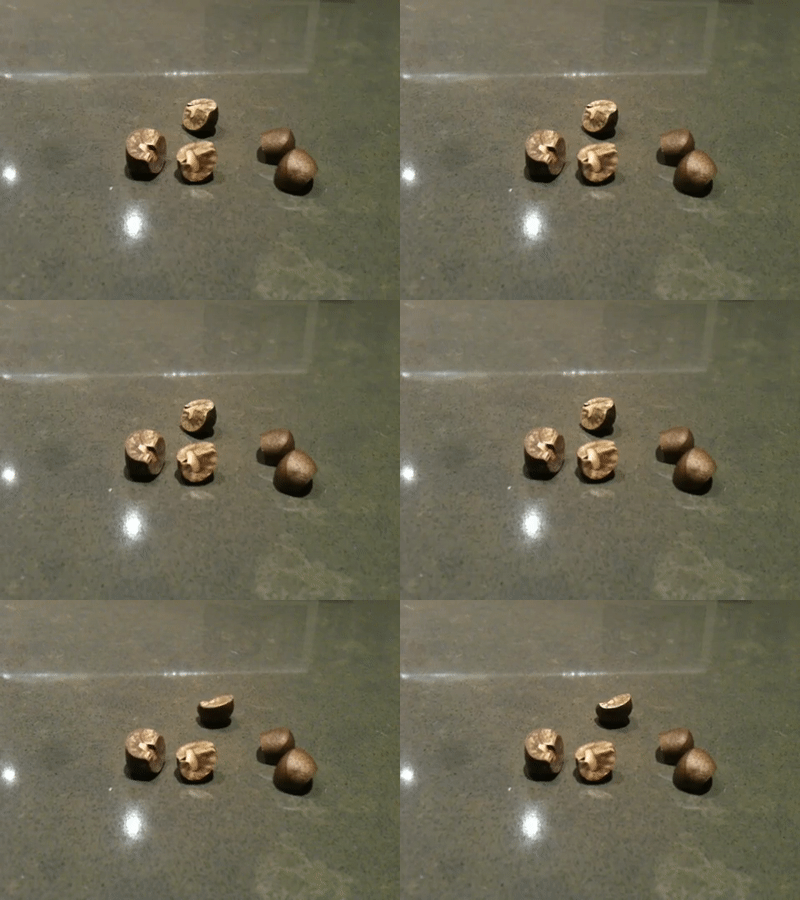
What sets Mexican jumping beans apart is their seemingly spontaneous movement. When exposed to heat or light, the larvae inside the beans become active, causing the beans to wriggle and jump.
This motion is a survival mechanism employed by the larvae to seek shelter and regulate their environment. As the larvae move within the bean, they can generate enough force to cause it to “jump,” sometimes several inches into the air

Cultural Significance
Mexican jumping beans hold a special place in Mexican folklore and culture. Referred to as “brincadores” in Spanish, these beans have been cherished as novelty items and are often associated with good luck and fortune.
In traditional Mexican markets, vendors sell these beans alongside other curiosities, delighting visitors with their lively antics.
Scientific Fascination
Beyond their cultural allure, Mexican jumping beans have also captured the interest of scientists and researchers. Studying the interactions between the plant, the moth, and the environment provides valuable insights into ecological dynamics and evolutionary adaptations.
Moreover, understanding the mechanics behind the beans’ movement has applications in fields such as materials science and robotics, inspiring innovative solutions inspired by nature.

Conservation Efforts
Despite their popularity, Mexican jumping beans face threats from habitat loss and over-harvesting. Conservation efforts are underway to protect the shrubs that produce these beans and to promote sustainable harvesting practices.
By raising awareness about the ecological importance of these plants and the delicate balance of their ecosystems, we can ensure the continued existence of this natural marvel for generations to come.

In a world filled with wonders, few are as enchanting and whimsical as the Mexican jumping bean. From their humble origins in the arid landscapes of Mexico to their cultural and scientific significance, these beans serve as a testament to the marvels of nature’s creativity.
As we marvel at their playful antics, let us also strive to preserve the delicate ecosystems that nurture them, ensuring that the magic of Mexican jumping beans continues to captivate and inspire us for years to come.

Please leave your comments in the “Leave a Reply” section at the bottom of this page


Please leave your comments in the “Leave a Reply” section at the bottom of this page