Tinkertoys: A Journey into the Past and Present
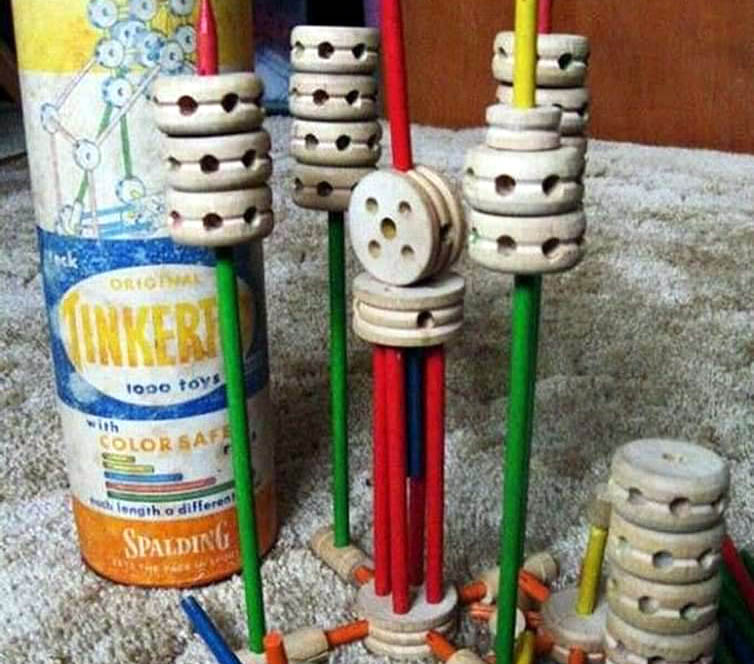
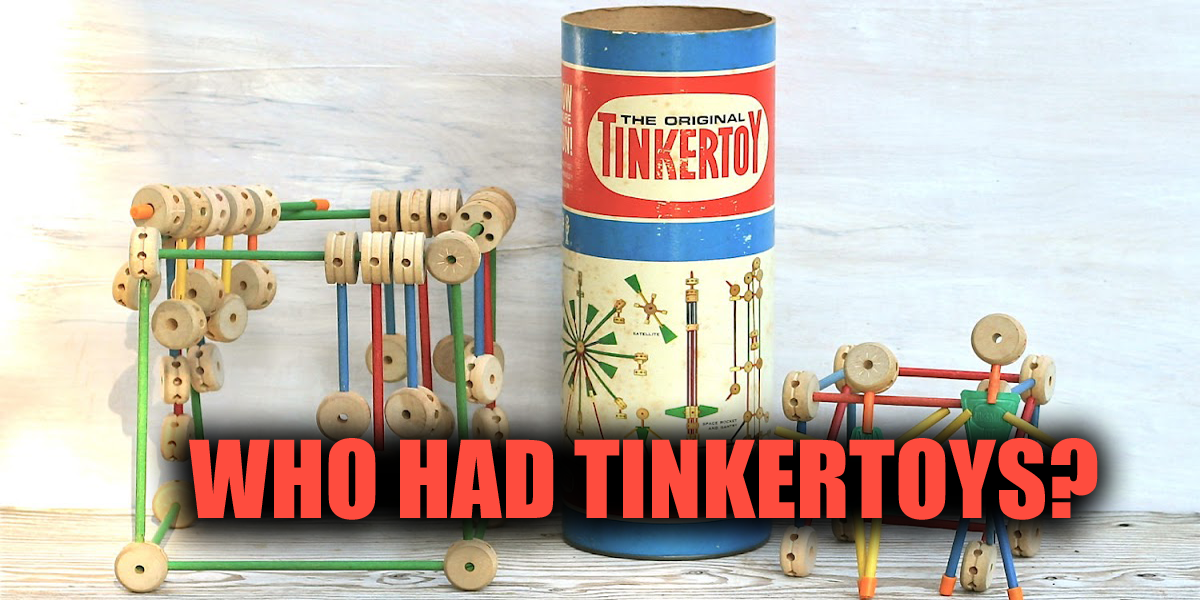
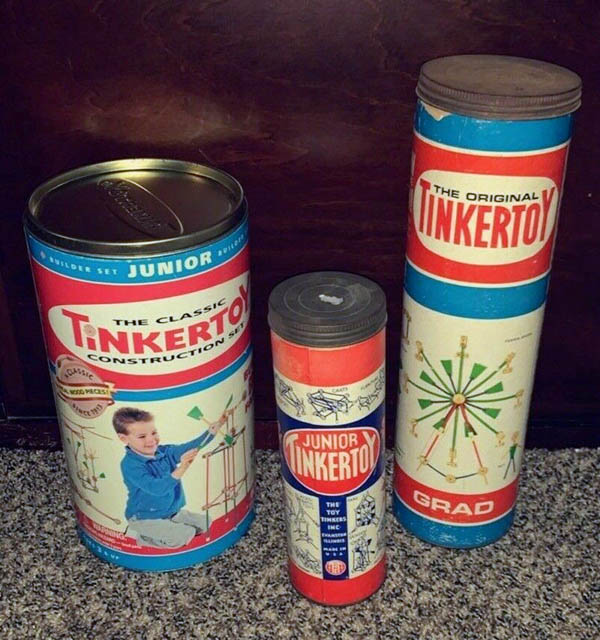
In the realm of childhood playthings, few toys evoke the same sense of nostalgic joy and endless possibility as Tinkertoys. These simple wooden rods and spools have been inspiring creativity and innovation in children and adults alike for nearly a century. Let’s delve into the fascinating history of Tinkertoy, exploring their inception and enduring appeal.
Please leave your comments in the “Leave a Reply” section at the bottom of this page
The Birth
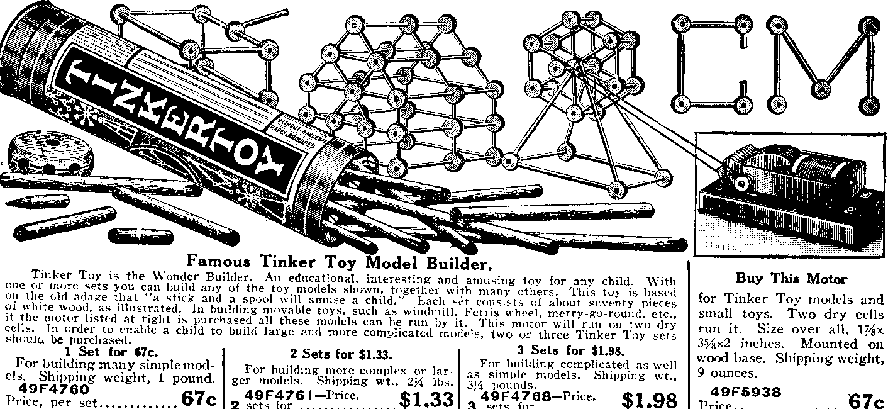
Tinkertoys were the brainchild of Charles H. Pajeau and Robert Pettit, who envisioned a toy that would stimulate children’s imaginations while promoting constructive play. In 1913, Pajeau, a stonemason, and Pettit, a woodworker, combined their talents to create the first Tinkertoy set.
Inspired by watching children play with pencils and empty spools of thread, they designed wooden rods and spools that could be interconnected to build an endless array of structures.
Early Success and Innovation
The first sets hit the market in 1914 and were an instant hit. Parents and educators recognized the value of Tinkertoys in fostering creativity, problem-solving skills, and spatial awareness in children.
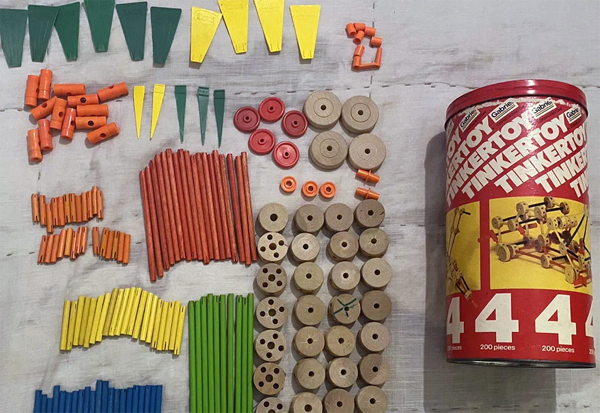
The sets underwent several changes, with improvements such as the addition of wheels, pulleys, and unique connector pieces, further expanding the possibilities for imaginative construction.

Enduring Appeal
Despite the advent of electronic gadgets and high-tech toys, Tinkertoys have endured as a timeless classic. Their appeal lies in their simplicity and versatility, allowing children to build anything their imagination desires, from simple structures to elaborate designs.
These toys continue to be cherished by generations of families, passing down the tradition of creative play from parent to child.
Educational Benefits
Beyond mere entertainment, Tinkertoys offer numerous educational benefits. They encourage hands-on learning and experimentation, teaching children concepts such as balance, symmetry, and basic engineering principles.
They also promote social interaction and collaboration when children work together to build and problem-solve.

Tinkertoys: Modern Applications
In today’s digital age, Tinkertoys remain relevant as a tool for promoting STEM (science, technology, engineering, and mathematics) education. Many schools and educators incorporate them into their curriculum to teach concepts such as geometry, physics, and even computer programming through hands-on activities.
Tinkertoys: A Reflection
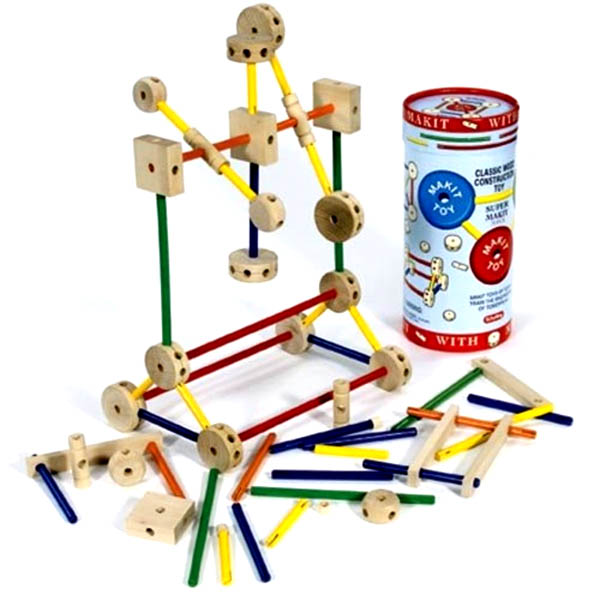
As we reflect on the journey of Tinkertoys from their humble beginnings to their enduring popularity, it becomes clear that these simple wooden building sets hold a special place in the hearts of children and adults alike.
With their ability to spark creativity, foster learning, and bring joy to countless generations, Tinkertoys stand as a testament to the power of imagination and play in shaping our lives. So, the next time you pick up a Tinkertoy, take a moment to appreciate the legacy of innovation and creativity that it represents

Still Available Today
Yes, this great toy is still available today at many retailers such as Walmart, Target, Amazon and many others.

Lincoln Logs
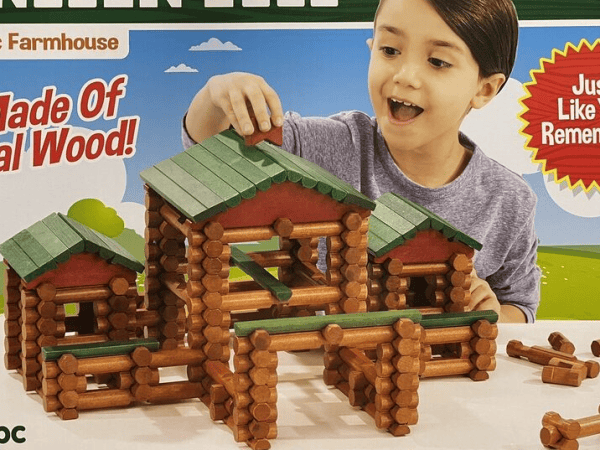
Lincoln Logs: A Classic American Toy In the realm of iconic toys that have stood the test of time, few hold as cherished a place in American culture as Lincoln Logs. These simple yet ingeniously designed wooden building blocks have sparked the imaginations of children for generations, fostering creativity, problem-solving skills, and a love for…
Keep reading
Please leave your comments in the “Leave a Reply” section at the bottom of this page



Please leave your comments in the “Leave a Reply” section at the bottom of this page