Bradlees History – What Happened?
Bradlees was named after Connecticut’s Bradley International Airport, where the store’s founders held early meetings.
This unique connection highlights the brand’s roots in the state and the community that supported its development.
The first store opened its doors in New London, Connecticut, on March 14, 1958, marking the beginning of a chain that would serve shoppers for decades.
In 1961, Stop & Shop, a well-known grocery chain, acquired Bradlees, expanding its business portfolio.
The acquisition of Bradlees by Stop & Shop significantly influenced both companies, allowing them to operate side by side in various locations until 1992.
This strategy provided customers with a wider range of shopping options, enhancing the convenience of grocery and general merchandise shopping.
Bradlees built a reputation for value and accessibility, becoming a well-known presence in communities while successfully catering to its diverse customers despite the competitive retail landscape.
In some cases, particularly in the New York/New Jersey metropolitan area, grand stores were constructed to accommodate both Bradlees and Stop & Shop.
Customers were able to freely roam between the two stores within these early examples of super-centers.
This tradition ended in 1982 when Stop & Shop decided to close its New York metro division and installed partition walls in the super-center stores.
Stop & Shop made a comeback to the area in the autumn of 2000 by rebranding its Edwards Super Food Stores chain as Stop & Shop.
Snack Stands and More
Like many of its competitors, including Caldor, Bradlees stores proudly showcased snack stands and lunch counters brimming with irresistible treats for shoppers.
From refreshing soft drinks and juicy hot dogs to crispy French fries and delectable soft pretzels, as well as indulgent ice cream and tempting prepackaged cookies, there was something to satisfy every craving.
In 1993, Bradlees took it up a notch by introducing Pizza Hut, Taco Bell, and Dunkin’ Donuts items to select stores, bringing even more excitement to the shopping experience.
These mouthwatering offerings were also integrated into the design of newly constructed stores, enhancing the overall appeal for customers.
Please leave your comments in the “Leave a Reply” section at the bottom of this page
Leave a Reply
Bradlees: Mrs. B
Bradlees became widely known for its captivating television and print ads featuring the beloved character “Mrs. B.” (played by the talented actress Cynthia Harris), who portrayed the chain’s discerning buyer.
Mrs. B. was relentless in her quest to uncover the best deals for her valued customers, as echoed in the memorable advertising jingle proclaiming, “At Bradlees, you buy what Mrs. B buys. And nobody can buy like Mrs. B.”
In 1988, Bradlees’ parent company, Stop & Shop, encountered a hostile takeover bid from Herbert Haft’s Dart Group.
In response, the board of directors took decisive action by enlisting Kohlberg Kravis Roberts & Company to secure the company in a significant deal finalized in 1989, thereby transitioning Stop & Shop into a private entity.

Bradlees: Bankruptcy and Closure
The paragraph describes the history of Bradlees store closures, including the initial closure in the Southern United States in 1988, profitability in the early 1990s, ownership changes, losses from new store openings, and the eventual filing for Chapter 11 bankruptcy in June 1995.

The End?
In August 1995, James Zamberlan became the executive vice president of Bradlees after working at Lazarus Department Stores.
The company recovered from bankruptcy in February 1999, following profitable performance in 1998 and early 1999.
Additionally, Bradlees took advantage of the closure of competitor Caldor after its bankruptcy, acquiring several of its former stores.
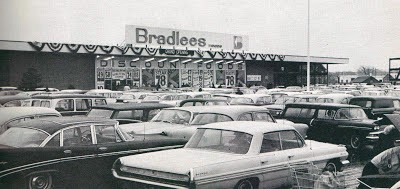
Financial Difficulties
Bradlees encountered financial difficulties in 2000, leading to its filing for Chapter 7 bankruptcy protection and subsequent liquidation sales.
The decision was attributed to various factors such as a general economic downturn, increased competition, and adverse weather conditions in the first half of 2000, which resulted in reduced disposable income for customers.
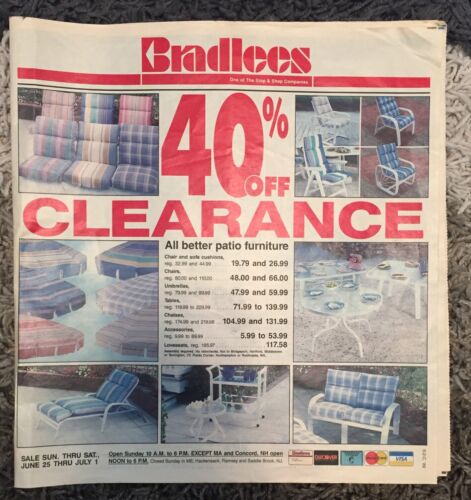
In an interview just before the chain’s closure, analyst Eric Beder of Ladenburg Thalmann & Co. expressed the view that the company needed a perfect economy to recover after its restructuring.
Unfortunately, the recent consumer spending slowdown did not facilitate such an environment.
Bradlees: Liquidation
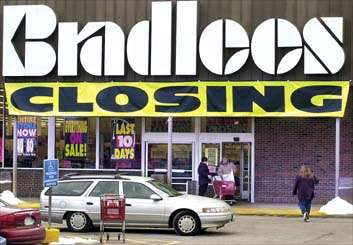
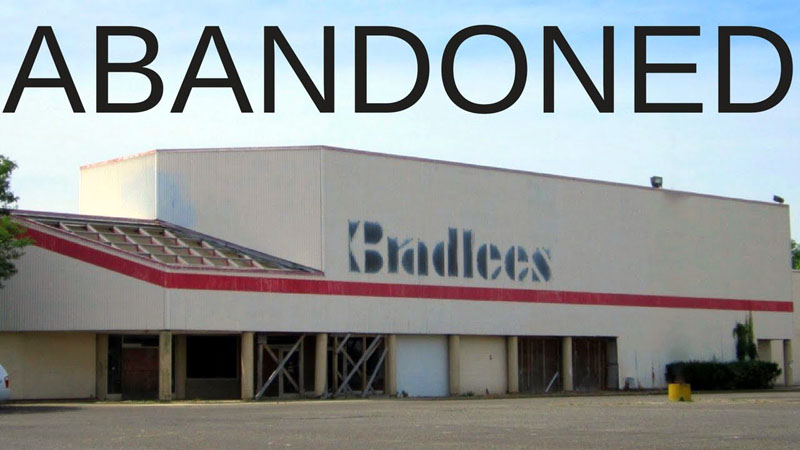
In early January 2001, Bradlees began liquidation sales, ultimately closing its last store on March 15, 2001.
Employing 10,000 individuals at the time, the chain had 105 stores across seven states.

Following its closure, many of its locations were acquired by Walmart, Big Lots!, Staples, and other retailers. Stop & Shop, which retained ownership of much of its real estate, was acquired by Ahold in 1996.
Some former Bradlees locations were sold to other Ahold divisions, such as Giant.