Written by Cavan O’Grady
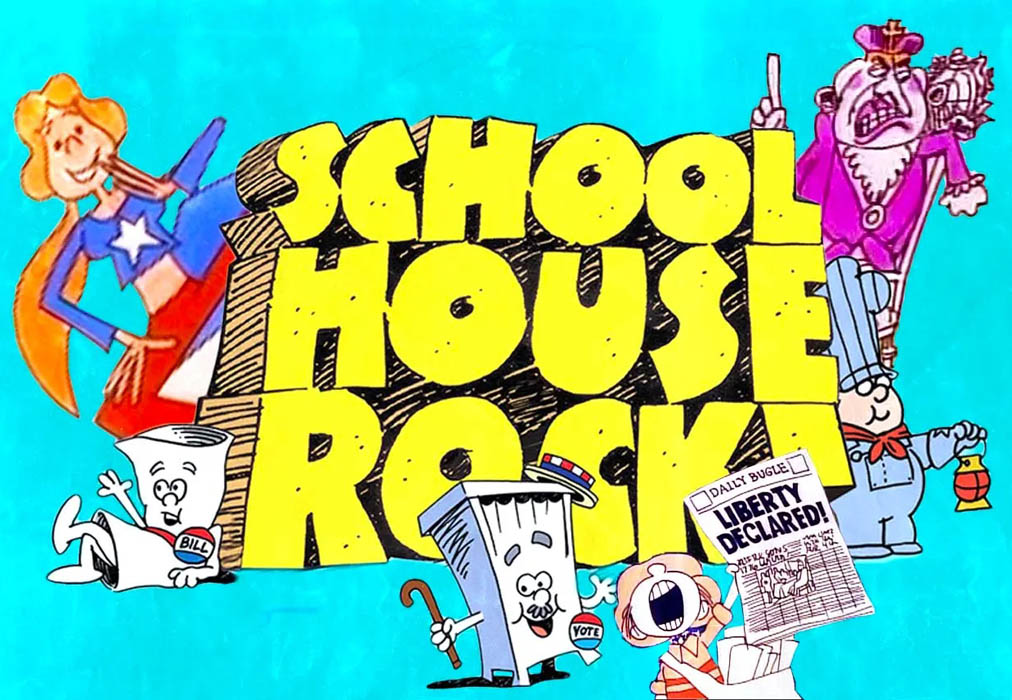
Schoolhouse Rock was a series of animated musical shorts that were shown on weekend mornings on ABC. Its original run lasted from 1973 to 1985.
The shorts aired during children’s shows and taught kids about grammar, math, science, and American history in a fun way, just like the sugary cereal they enjoyed while watching.
It was later revived from 1993 to 1996 and additional episodes were produced in 2009 for direct-to-video release.

Here are 10 fun facts about the popular series:
The concept of Schoolhouse Rock ignited in the vibrant atmosphere of a New York ad agency in 1971.
David McCall, the visionary chairman of McCaffrey & McCall, couldn’t help but notice his young son’s struggle with the daunting multiplication tables.
Yet, this same boy could effortlessly sing along to the catchy tunes of beloved artists like The Beatles and The Rolling Stones.

1) In a flash of inspiration, McCall realized the magic that could occur by merging education with the irresistible power of music.
2) McCall and creative director George Newall commissioned jingle writer Bob Dorough to create a song about the multiplication table without patronizing children, resulting in “Three Is a Magic Number,” which impressed them for its contextual integration of the three times table in various aspects of life.
3) When the song was presented to Michael Eisner, then Vice President for Children’s Programming at ABC (and later chairman and CEO of Disney), Eisner loved it too and bought the cartoon right then and there.
Please leave your comments in the “Leave a Reply” section at the bottom of this page
Schoolhouse Rock: Three Is a Magic Number
4) “Three Is a Magic Number” first premiered on the pilot episode of “Curiosity Shop” on September 2, 1971. The show was an educational program from Looney Tunes mastermind Chuck Jones and had impressive talent. Cartoon legend Mel Blanc provided voices, Vincent Price and Shirley Jones appeared, and Ray Bradbury had a writing credit.

5) On the morning of Saturday January 6, 1973, Schoolhouse Rock premiered with four three-minute shorts that played between regularly scheduled cartoons: “My Hero, Zero,” “Elementary, My Dear,” the aforementioned “Three is a Magic Number,” and “The Four-Legged Zoo.” They were an instant hit.

6) Multiplication Rock was the first Schoolhouse Rock series, and covered the multiplication tables from zero to 12 (sans 1 and 10). It was released as an album in 1973 and received a Grammy nomination. And regarding awards, Schoolhouse Rock went on to win 4 Emmys.
Figure Eight
7) Most songs were upbeat, but “Figure Eight” was an exception in that it had a largely melancholic melody and the subjective matter of the video included skaters falling into an ice pond.
Bob Dorough wrote “Figure Eight” and when his wife heard it, she thought the melody wasn’t appropriate for a Schoolhouse Rock song.
Bob wasn’t so sure but when he presented it to the producers, “they flipped.” They felt is was a great change of pace from the usual sound.

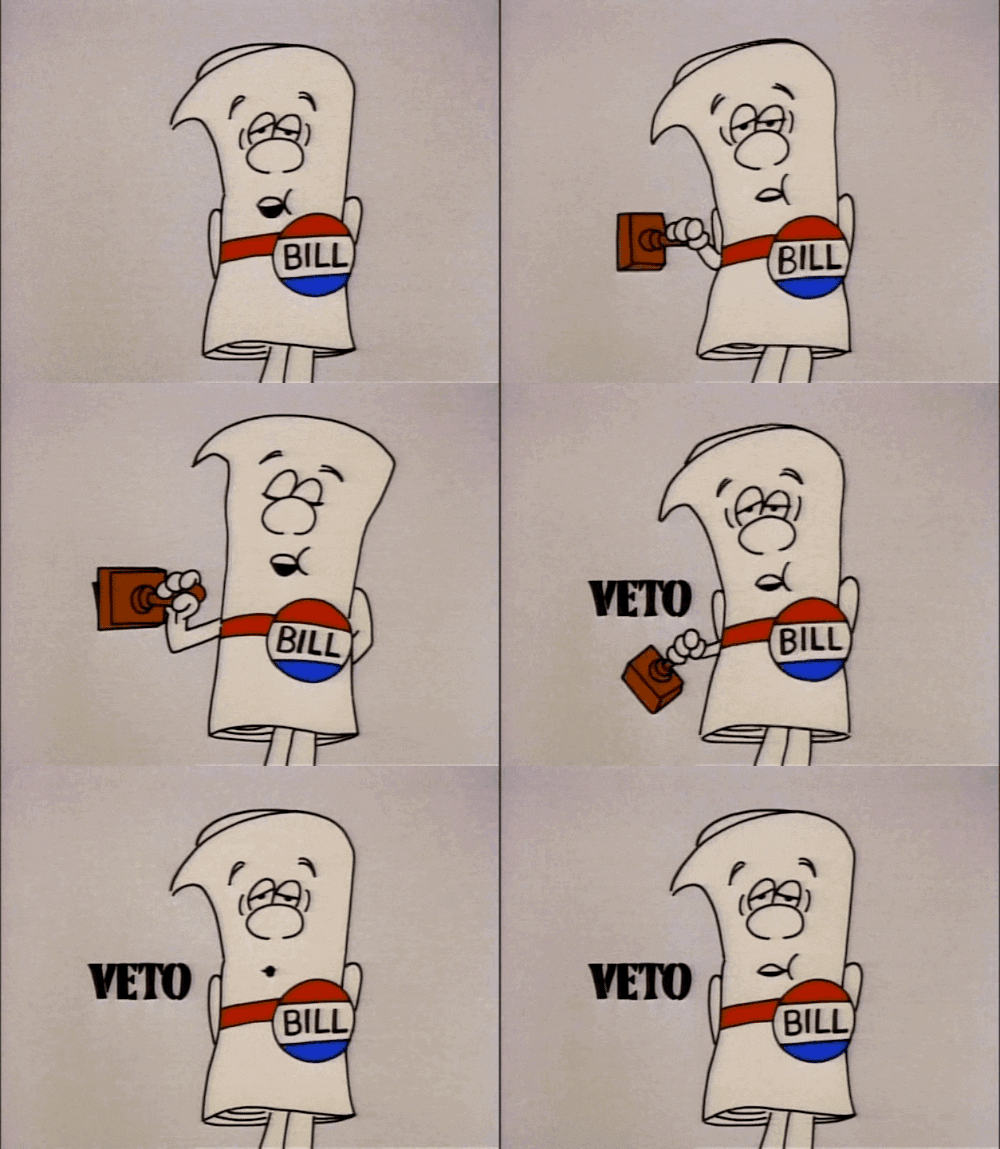
8) After Multiplication Rock, Grammar Rock (which included the classic “Conjunction Junction”), America Rock (which featured “I’m Just A Bill”), Science Rock, and finally “Scooter Computer and Mr. Chips” followed.
“Scooter Computer and Mr. Chips” was a series about the titular characters (the only recurring characters in all of Schoolhouse Rock) and consisted of just four segments about home computer technology, which was just coming onto the scene.
As the references and depictions quickly became outdated due to rapidly advancing technology, these segments stopped airing after 1985.
9) Various governmental and lobbyist groups have requested cassettes of “I’m Just a Bill” to use in their training programs for staffers. The University of Michigan Medical School and Columbia College of Physicians and Surgeons once called to ask for “Telegraph Line” to help introduce the nervous system to first-year medical students, according to producer George Newall.
Lynn Ahrens
- Lynn Ahrens, who has written and sung some of Schoolhouse Rock’s most famous tunes, had quite an interesting start. She was hired as a secretary at McCaffrey & McCall right out of college when she was 22.
Ahrens wasn’t keen on her daily tasks and often brought a guitar to the office to play during downtime. One day, producer George Newall heard her playing and asked her to try writing a song for the series.
She wrote “The Preamble,” and it launched her career. She has gone on to win multiple Tony Awards for her work on Broadway.
Schoolhouse Rock: Bonus Fun Fact:
11) An episode of Saturday Night Live in 1998 featured a Schoolhouse Rock parody by Robert Smigel called “Conspiracy Theory Rock.” It was part of his TV Funhouse series.
It took on big corporations with lyrics about cancer and the military industrial complex. The parody ran only once, prompting viewers to develop their own theory that NBC was suppressing the controversial subject matter.

However, SNL creator and producer Lorne Michaels claims that it was not included in the shortened reruns because it “didn’t work comedically” and he wanted more screen time for a second Backstreet Boys performance.
~ Written by Cavan O’Grady
Leave a Reply