A Growing Sport
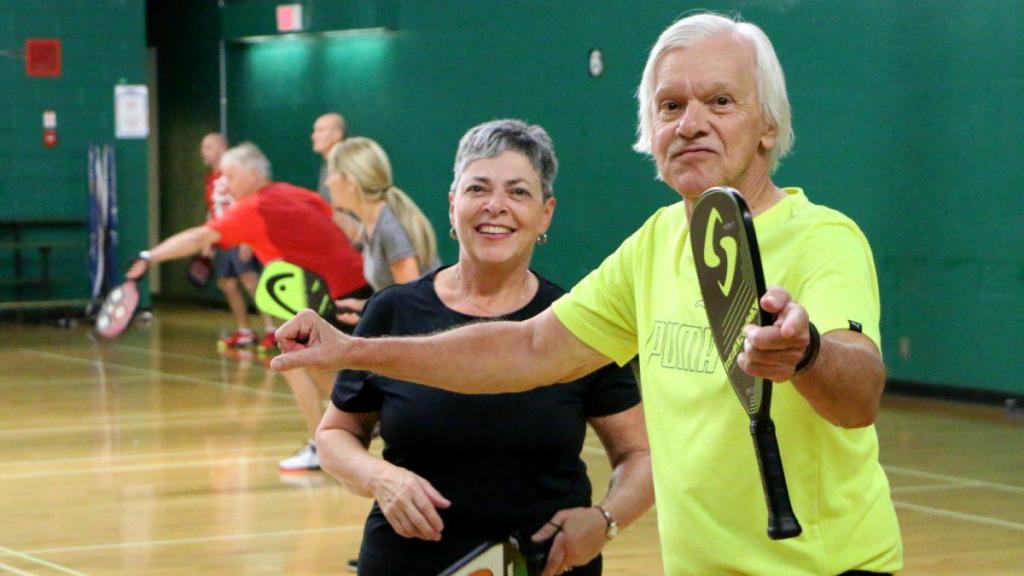
Pickleball is said to be the fastest growing sport in the United States today. Currently, over four million Americans play it.
Introduction to Pickleball
Pickleball, often described as a blend of tennis, badminton, and ping-pong, has been gaining immense popularity across the United States and beyond.
Whether you’re a retiree looking for a fun, social activity or a young athlete seeking a new competitive sport, pickleball offers something for everyone.
This article will delve into the history, rules, benefits, and how you can get started with this engaging sport.
A Brief History
Invented in 1965 on Bainbridge Island, Washington, by Congressman Joel Pritchard, Bill Bell, and Barney McCallum, pickleball was created as a family pastime.
The name “pickleball” amusingly derives from the term “pickle boat” in crew rowing, which refers to a boat made up of leftover rowers.
However, there’s also a tale attributing the name to the Pritchards’ dog, Pickles, who would chase after the balls.
How to Play Pickleball
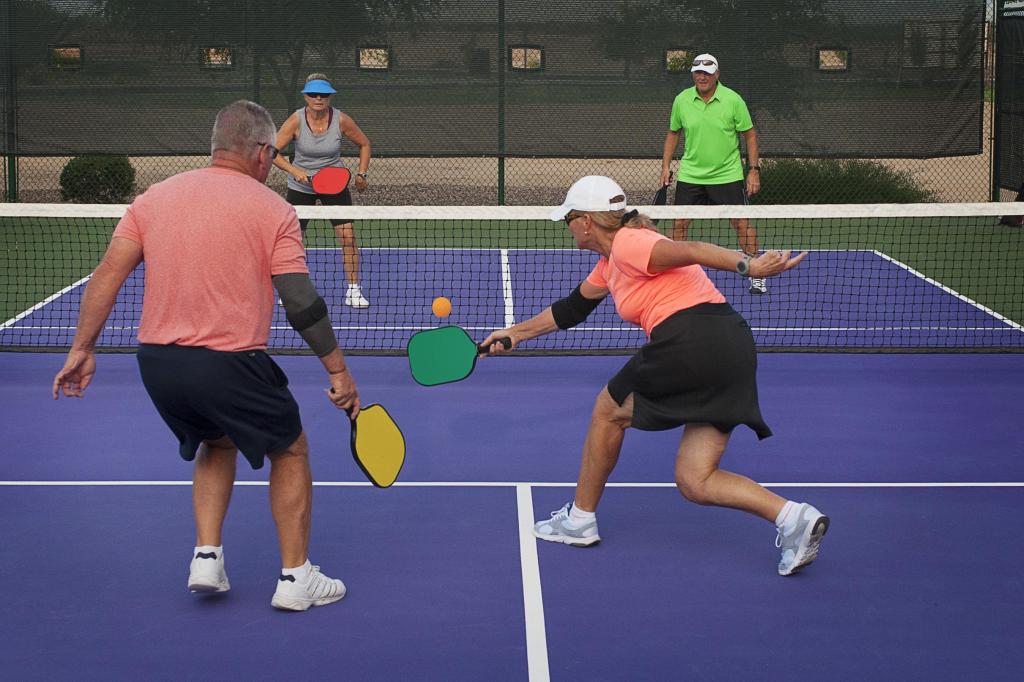
- The Court: A pickleball court is smaller than a tennis court, measuring 20 feet by 44 feet for doubles play. The net is 36 inches high at the sidelines and 34 inches at the center.
- Equipment:
- Paddle: Similar to a large table tennis paddle, made from wood or composite materials.
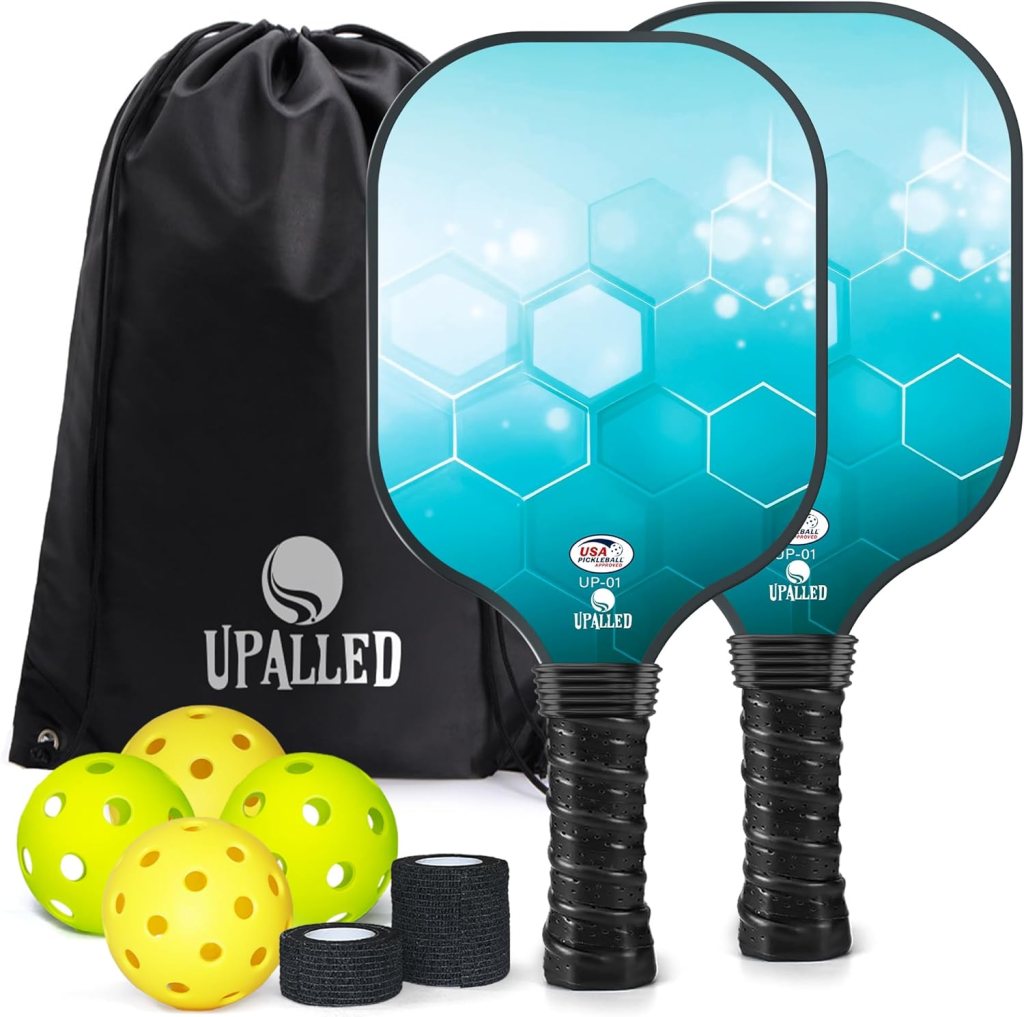
- Ball: A perforated polymer ball similar to a wiffle ball, but with smaller holes.
- Rules:
- Serving: Serve underhand, diagonally across the court. The serve must clear the non-volley zone, commonly known as “the kitchen.”
- Double Bounce Rule: Each side must make at least one groundstroke before volleying (hitting the ball in the air before it bounces).
- Non-Volley Zone: You cannot volley the ball while standing in this 7-foot zone on either side of the net.
- Scoring: Games can be played to 11, 15, or 21 points, but you must win by two points. Only the serving team can score points.
Benefits of Playing Pickleball
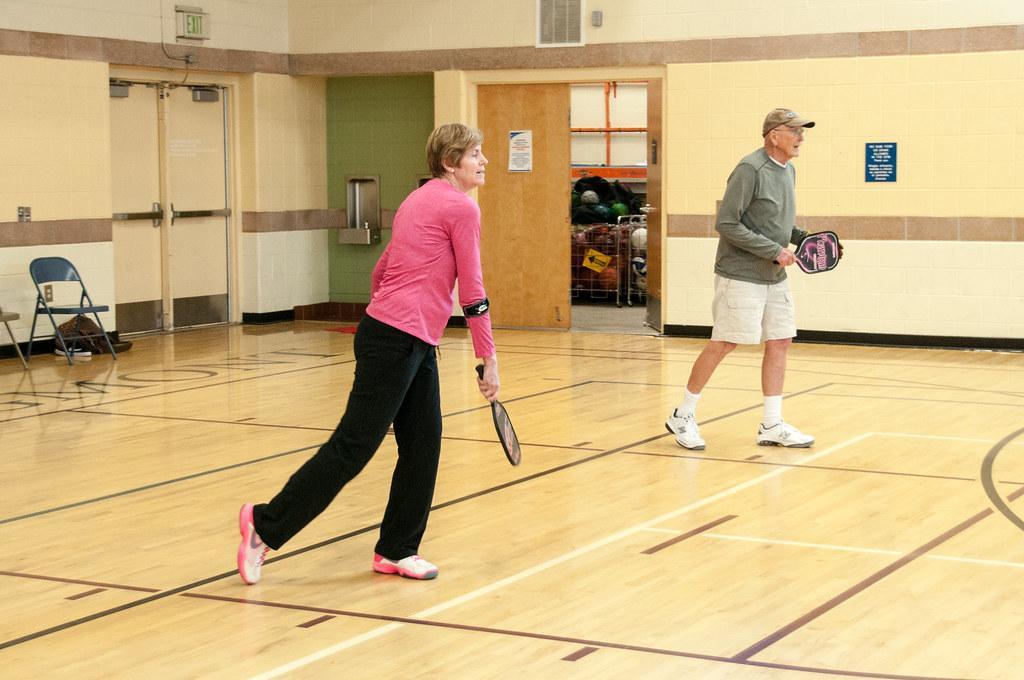
- Physical Fitness: It’s an excellent way to improve cardiovascular health, coordination, and agility.
- Social Interaction: The sport’s communal nature fosters friendships and community among players.
- Mental Health: Engaging in pickleball can reduce stress and improve cognitive functions due to the strategic elements involved.
Getting Started with Pickleball
- Find a Place to Play: Many community centers, schools, and park districts now have dedicated pickleball courts. Check local sports facilities or pickleball clubs for available courts.
- Gear Up: Start with a beginner-friendly paddle and a few balls. Brands like Selkirk, Onix, and Gamma offer quality gear for newcomers.
- Learn the Basics: Consider taking a lesson or attending a clinic. Many areas have free introductory sessions or you can join a local pickleball group.
- Join or Form a Group: Playing with others not only improves your skills but also makes the game more enjoyable. Look for meetups or consider starting your own group.
Pickleball’s Simplicity
Pickleball’s simplicity, combined with its social and health benefits, makes it a sport that’s easy to love.
Whether you’re looking to stay active, meet new people, or just have fun, pickleball can be your next great adventure.
So grab a paddle, learn the rules, and dive into the world of pickleball – you might just find yourself hooked!
“Interested in trying pickleball? Share your experiences or questions in the comments below, or find a local game with our community directory!”
TAGS: “pickleball rules,” “how to play pickleball,” and “pickleball benefits” for better search engine rankings.
Please leave your comments in the “Leave a Reply” section at the bottom of this page
Leave a Reply

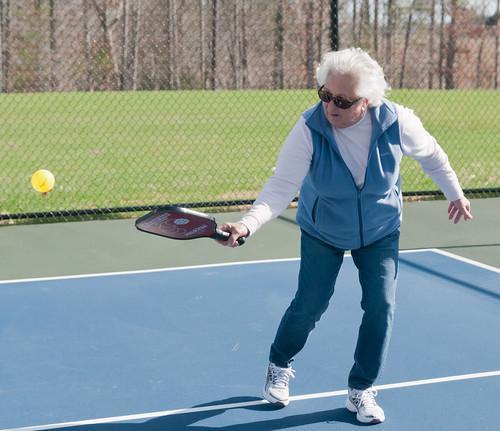
“While tennis remains a country club tradition, Pickle Ball’s low profile and relative ease makes it more accessible – a sport that almost anyone can pick up fairly quickly”
Pickleball Tournaments
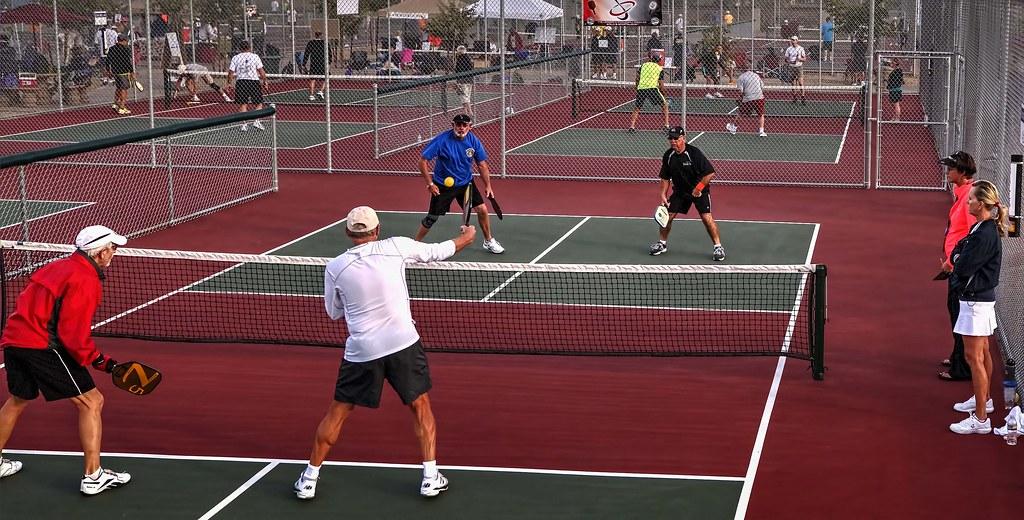
Pickle Ball organizations, such as the USA Pickleball Association, have begun to sponsor tournaments for players. These organizations have also made application to the Olympics Committee to compete in the 2028 Olympics.
Pickle Ball has become the fastest growing sport in the U.S. today. It may be considered an easier sport than tennis the game still requires a significant amount of practice
Elizabeth McVey, Author, 2022
Basic Pickleball Rules
Pickleball is a fun and fast-paced sport that combines elements of tennis, badminton, and ping-pong. Here are the basic rules to get you started:
1. Court and Equipment
- Court Dimensions: The court is 20 feet wide by 44 feet long, divided into two halves by a net.
- Net Height: The net is 36 inches high at the sidelines and 34 inches high in the middle.
- Equipment: Players use a paddle and a perforated plastic ball, similar to a wiffle ball.
2. Scoring
- Points: Points can only be scored by the serving team.
- Game: Games are typically played to 11 points, but must be won by at least 2 points.
- Match: Matches are usually best 2 out of 3 games.
3. Serving
- Serve Motion: The serve must be made underhand, with the paddle contacting the ball below the server’s waist.
- Serve Placement: The serve must be hit diagonally across the net, landing within the opponent’s service court beyond the non-volley zone (kitchen).
- Serve Rotation: The server continues to serve until their team commits a fault. In doubles, each player on a team serves before the serve switches to the opponents.
4. Double Bounce Rule
- First Bounce: The ball must bounce once on each side before players can volley (hit the ball in the air without letting it bounce). This means the receiving team must let the serve bounce, and the serving team must let the return of serve bounce before playing the ball.
5. Non-Volley Zone (The Kitchen)
- Kitchen Rules: Players cannot volley the ball while standing in the non-volley zone, a 7-foot area on both sides of the net. Players may enter the kitchen to play a ball that has bounced.
6. Faults
- Fault Examples:
- Hitting the ball out of bounds.
- Not clearing the net.
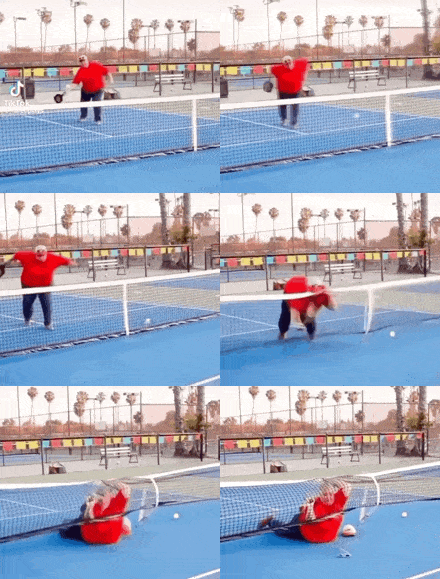
- Volleying the ball from within or stepping into the non-volley zone while volleying.
- Volleying before the ball has bounced once on each side (violating the double bounce rule).
7. Doubles Play
- Serving Sequence: In doubles, each team has two serves (one per player) except for the first service sequence of the game, which starts with only one serve.
- Player Positions: Players switch sides of the court only after scoring a point.
Leave a Reply